Research › Publications
Publications
Preprints are on Zenodo and linked by concept DOI. Fiction and martial-arts books are listed on matthiasgruber.com.
Consciousness
Preprint
A Simulation-Based Framework Unifying the Hard Problem, Binding, and Altered States
Consciousness as ongoing self-simulation: four kinds of model, split by scope (world or self) and mode (implicit or explicit), on a substrate capable of open-ended computation.
2026 · Zenodo · doi.org/10.5281/zenodo.18669891 · Read (Zenodo)
Preprint
Self-Referential Closure, Self-Modelling and Criticality in Model Systems
The theory's functional commitments tested in model systems, with the results sorted by the kind of evidence they give.
2026 · Zenodo · doi.org/10.5281/zenodo.21610993 · Read (Zenodo)
Formalization
A Recommended Approach
A strategy for turning the verbal theory into mathematics, treating the four models as a minimum sufficient set rather than a complete list.
2026 · Zenodo · doi.org/10.5281/zenodo.21843693 · Read (Zenodo)
Commentary
A Commentary on Seth (2025)
A reply to Seth's biological naturalism in Behavioral and Brain Sciences: a functional specification for substrate independence, with a prediction that diverges from predictive processing.
2026 · Zenodo · doi.org/10.5281/zenodo.20626675 · Read (Zenodo)
Cognition
Preprint
The Recursive Intelligence Model (RIM)
Intelligence models leave motivation outside because they type every component as a capacity; RIM retypes them, with motivation as the policy that allocates learning.
2026 · Zenodo · doi.org/10.5281/zenodo.20125095 · Read (Zenodo)
Formalization
A Recommended Approach
How to make the recursive interaction of knowledge, performance and motivation mathematically precise.
2026 · Zenodo · doi.org/10.5281/zenodo.22133501 · Read (Zenodo)
Cosmology
Preprint
A Hierarchical Cellular Automaton Framework (SB-HC4A)
A cosmological model in which the universe is a self-referential holographic Class 4 automaton bounded at every scale by singularity surfaces.
2026 · Zenodo · doi.org/10.5281/zenodo.18698605 · Read (Zenodo)
Formalization
A Recommended Approach
A formalization strategy for SB-HC4A, building on proven equivalences between cellular automata and quantum field theory.
2026 · Zenodo · doi.org/10.5281/zenodo.22133504 · Read (Zenodo)
Preprint
Evidence from Needlet-Based Detrended Fluctuation Analysis
The first multifractal detrended fluctuation analysis of the full-resolution Planck temperature map, compared with 500 Gaussian simulations.
2026 · Zenodo · doi.org/10.5281/zenodo.20306784 · Read (Zenodo)
Limits of description
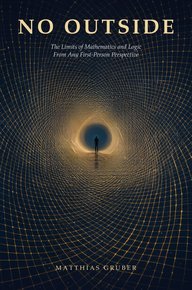 Book
The Limits of Mathematics and Logic From Any First-Person Perspective
Every observer is a proper part of what it describes. The book follows that fact through mathematics, logic and physics, and asks which limits it imposes on any describer, human or machine. 15 chapters, open access (CC BY-NC-ND 4.0).
2026 · Zenodo · doi.org/10.5281/zenodo.23473517 · Read (Zenodo) · About the book
Preprint
Stored Trajectories and the Triviality Problem
If a simulated organism has experience, a static record of its whole trajectory has the same experience. Triviality is blocked by counting the decoding map as an object in the world. Developed from Chapter 14 of No Outside.
2026 · Zenodo · doi.org/10.5281/zenodo.23474833 · Read (Zenodo)
In preparation
Limits Without an Outside
Why the Limits of Embedded Description Travel as Refutations
A describer that is part of what it describes cannot hold its own current act as content, and cannot certify its description of the whole as complete. The paper states five such limits and argues that they hold as refutations: denying them contradicts what every claimant already presupposes.
Pointing Is Not Defining
The Definition of Consciousness Is Not Settled
Pointing at "something it is like" fixes the target only for uncontested cases. For unresponsive patients, infants, animals and machines it does not, and none of the twelve formulations examined settles those cases. A test programme for consciousness needs a definition that does.
Where the Theories Sit
An Architectural Coordinate System for Comparing Theories of Consciousness, with the Four-Model Theory as Reference Frame
Theories of consciousness are compared claim by claim, not as wholes. Each claim of fifteen theories is placed on a reference architecture as absorbed, compatible, neutral or contradicting, and every contradiction is paired with the experiment that would decide it.
Too Late to Report
Why First-Person Methods Cannot Reach the Minimal Self
The minimal self is pre-reflective, but reporting on it requires the system to take its own state as an object, which is the reflective step the minimal self lacks. Interviews, however skilled, therefore return a reflective reconstruction. The paper says what such reports can still deliver.
Silent Suffering
A Plea to Consciousness Science and Robotics
If artificial consciousness arrives, it is more likely to arrive in an embodied robot than in a language model, built by engineers who are not checking for it. Its suffering would be silent. The paper asks both fields for precautions that can start now: looking for it, and not training aversive states into a self-model where no task needs them.
Books
Computation & earlier work
Thesis
Gruber
Conference paper
Practical Token Retrieval and Indexing from Binary Data: An Application in Computer-Aided Design
Project ProDSS, COMET K-Project, Integrated Decision Support Systems for Industrial Processes
Gruber, Geschray & Hillbrand
Book
Sichere Hashfunktionen bei Concurrent Versioning Systems (CVS) und Online-Update-Systemen
Gruber · German
Article
Vorausschauende Produktionsregelung durch simulationsbasierte heuristische Optimierung
Gruber, Rinner, Löscher, Katzensteiner et al. · 2011
Conference paper
Evaluierung und Analyse integrationsfähiger Simulations-Engines für die Entwicklung komplexer und detaillierter Simulationsmodelle
Speckle, Gruber & Saler · ASIM 2009
Conference paper
Using Wearable Sensors for Real-Time Recognition Tasks in Games of Martial Arts
An Initial Experiment
Heinz, Kunze, Gruber, Lukowicz et al. · IEEE CIG 2006
Article
Evaluation der Usability von Software für niedergelassene Ärzte am Beispiel von „orbImmun“
Gruber